


About us
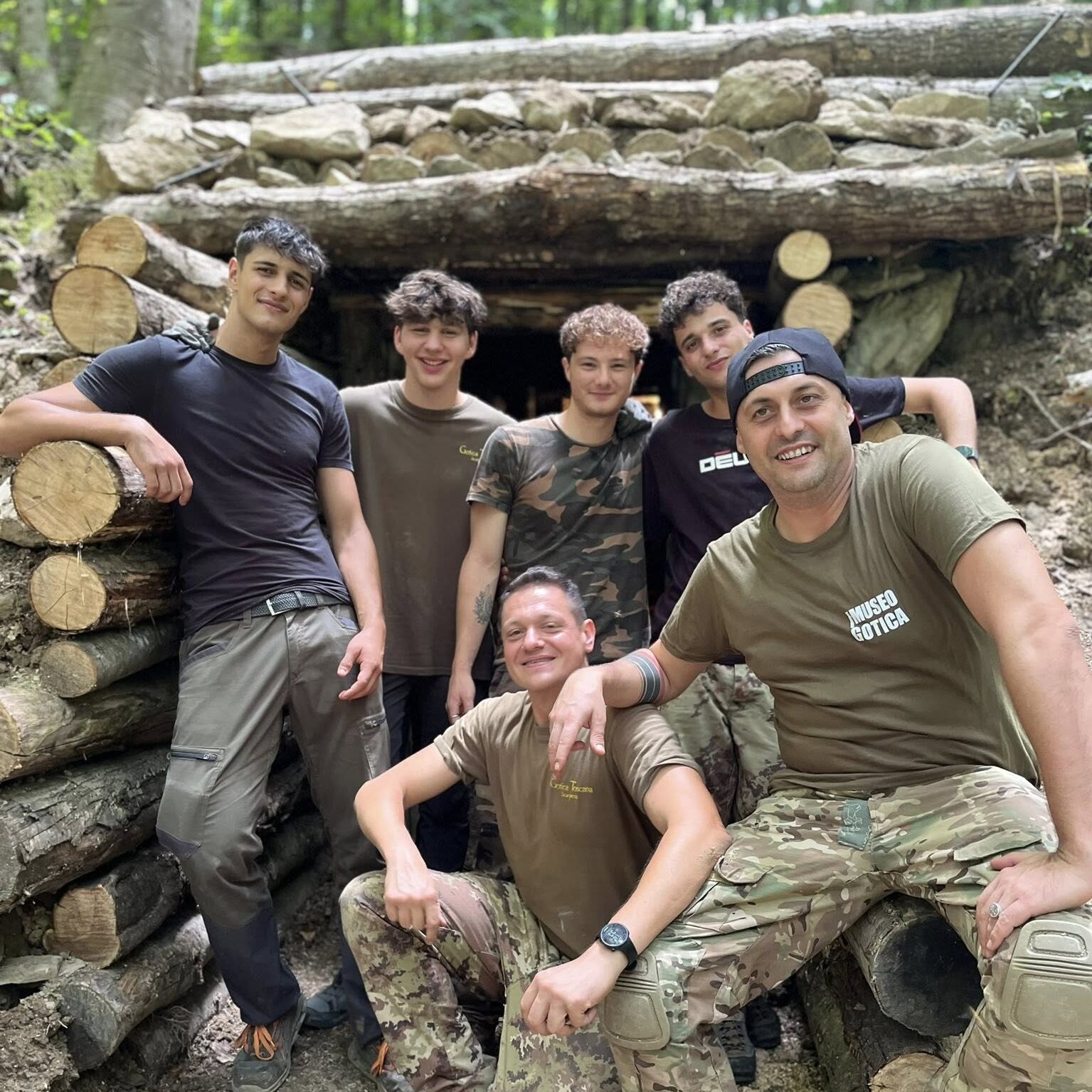
The project is the work of Leonardo Baggiani, a young researcher from Arezzo into the history of the Second World War, together with a group of young friends, scholars and enthusiasts, who belong to the association Gotica Toscana aps. Together they search the ground and the archives, retracing what happened in that summer of 1944.
This work springs from a civic as well as a historical commitment.
- To keep memory alive.
- To remember with dignity those who lie in our cemeteries.
- To honour, too, the many soldiers killed and forgotten in these mountains.
In their honour and everlasting memory.
The project
This site was born of a simple and alarming observation. More than eighty years after the events, the Arezzo area has all but lost sight of the decisive part it played in the war of summer 1944. It was a war fought house by house and ridge by ridge, which here was neither peripheral nor secondary, but an integral part of the Allied effort to open the road to Florence, the Apennines and, finally, the Po Valley.
Today the history of the war in this sector is fragmented. Episodes are told in isolation. What is missing is an overall picture that conveys the meaning of the military operations, the presence of the units, the weight of the strategic choices and the human cost paid by soldiers and civilians.
Our task is to piece the mosaic back together.
A key area in the summer of 1944
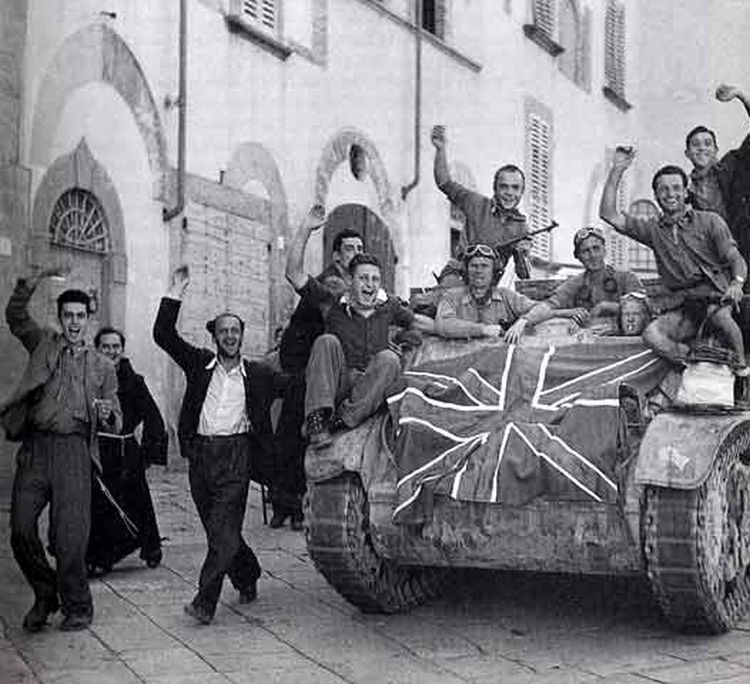
After Rome, General Leese’s British Eighth Army advanced northwards along key axes. On one side lay the upper Tiber valley, the Valtiberina, as far as Anghiari and beyond, towards Arezzo. On the other lay the Trasimeno and Valdichiana sector, where battles such as Sanfatucchio and Chiusi opened the way to the plain. Further north the fighting moved onto the Apennine ridges, from Monte Lignano to the Casentino, along the Umbertide–Palazzo del Pero line.
This ground was vital. It was from here that the attack on the Gothic Line and the breakthrough towards the heart of northern Italy were being planned. That is why the war was bitter and unrelenting, often invisible in its daily round of patrols, local clashes, artillery fire and attrition. On 26 July 1944 King George VI was at Arezzo and watched the fighting at Campriano from the lawn of the Medici Fortress: his presence clearly signals the symbolic and strategic value attached to this sector.
Armies, men, forgotten battles
South African, New Zealand, Indian and Nepalese units fought in these mountains and valleys alongside British forces: units that distinguished themselves in hard and often little-known actions, paying a high price in lives. Facing them, the German troops put up a stubborn defence, while the occupier answered the presence of the partisans with systematic repression.
To keep control of strategic positions and to break the bond between the population and the Resistance, the Germans resorted to round-ups and massacres. The Arezzo area thus became one of those with the highest number of massacres in Italy. This too is little known, often forgotten or reduced to isolated episodes.
A fragmented history to be pieced together
The war in the province of Arezzo was not a single event but the sum of battles large and small, of individual stories, of forgotten units, of civilians swept away. This site sets out to hold all these elements together. The military operations and the micro-histories. The regular armies and the partisans. The soldiers buried in the war cemeteries at Assisi and at Indicatore, Arezzo, and those who remained in the mountains, often without a name. The aim is not to celebrate but to understand. To give historical depth back to places that people pass through today without memory. To explain why men fought here, why they died here, and why these events belong fully to the history of the war in Italy.
Method and research
The project combines historical research, fieldwork and archival investigation. Military documents found in the London archives, maps, testimonies, photographs, and Italian and foreign archives, German ones included, are set alongside direct study of the ground. The places are walked, observed and compared with the sources. Every trace is checked, every account placed back in its context.
The aim is to build an account that is solid, well founded and accessible, able to link well-known events with facts that have been ignored or underestimated, and so to give an overall view of the war in the Arezzo sector.