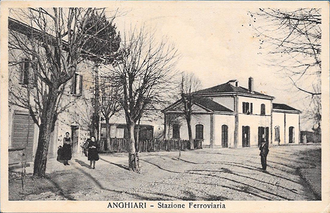
In the summer of 1944, as the front moved up the Alta Valle del Tevere, the Arezzo area became the scene of one of the most methodical operations of infrastructure sabotage in the Italian Campaign. At the centre of this strategy of annihilation was the Ferrovia Appennino Centrale (FAC), the narrow-gauge (950 mm) railway line that linked Arezzo to Fossato di Vico. What had been an important artery of communication between the Arezzo area and Umbria, and central Italy towards the Adriatic, was reduced to a heap of rubble in a few weeks of German retreat.
The prelude: Allied air interdiction
Before the German demolition engineers began their work of destruction on the ground, the railway had already been hit hard from the air. As part of Operation Strangle, the operation intended to ‘strangle’ German supplies, the Allied air forces of the RAF and the USAAF had identified the Arezzo junction as a critical point.
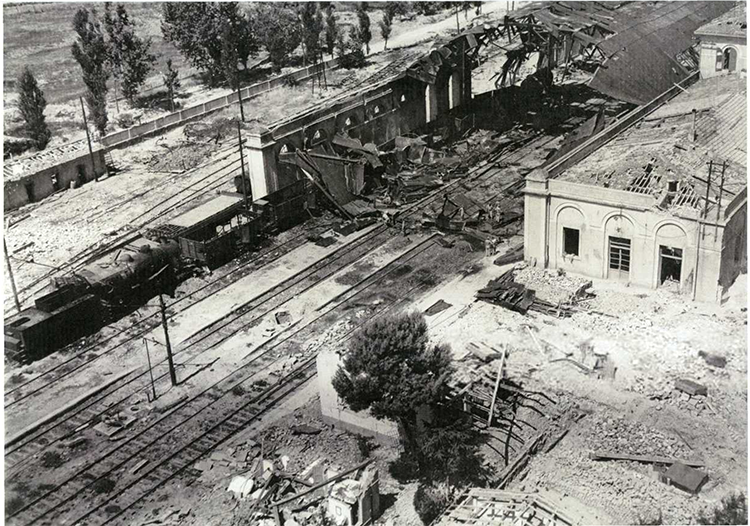
On 2 December 1943 Arezzo suffered its first, devastating air raid. The primary target was the railway station and the Pescaiola goods yard. Although the Allied raids aimed to interrupt traffic by causing repairable damage, they laid the ground for the collapse of the line, destroying much of the rolling stock and of the workshops needed for maintenance. The final destruction, however, was the work not of bombs falling from above but of dynamite placed on the ground.
The heart of the destruction: the wasteland technique
When, in July 1944, the German command realised that Arezzo and the Valtiberina would fall, the ‘Scorched Earth’ plan (Verbrannte Erde) was set in motion. The mission was to leave the Allies not a single usable kilometre of track.
The Schienenwolf: the ‘Wolf’ of the rails
On various stretches of the line between Arezzo and Anghiari, the Germans used the Schienenwolf, the Rail Wolf. It was a huge steel plough mounted on a railway wagon: once lowered between the rails and hauled by two locomotives, the ‘hook’ literally tore the sleepers out of the ground and bent the rails inwards. This technique did not merely cut the line: it destroyed the trackbed, making a quick repair impossible.
The surgical sabotage of bridges and tunnels
The demolition engineers (Pioniere) worked with a scientific precision aimed at irreversible structural damage:
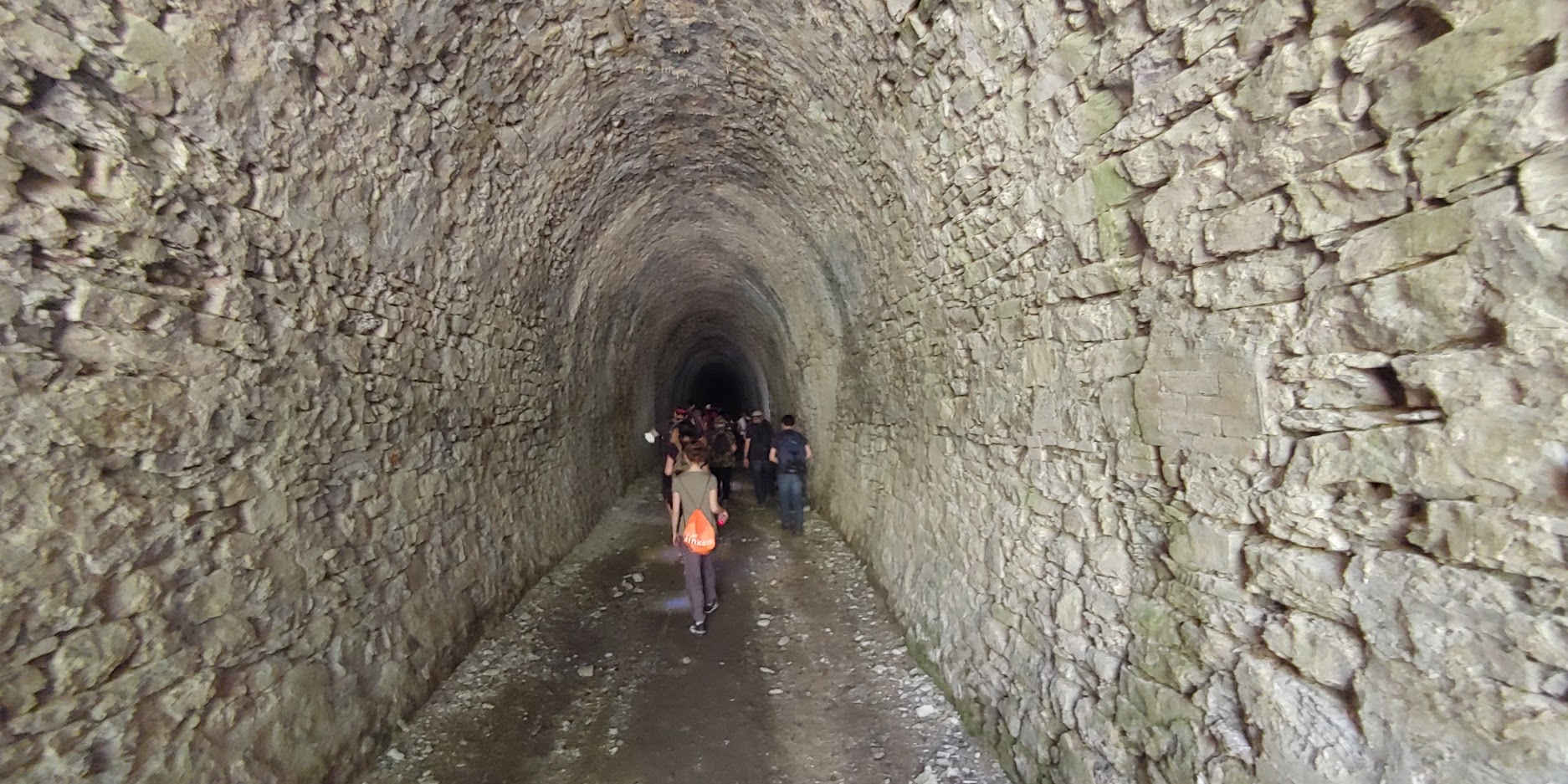
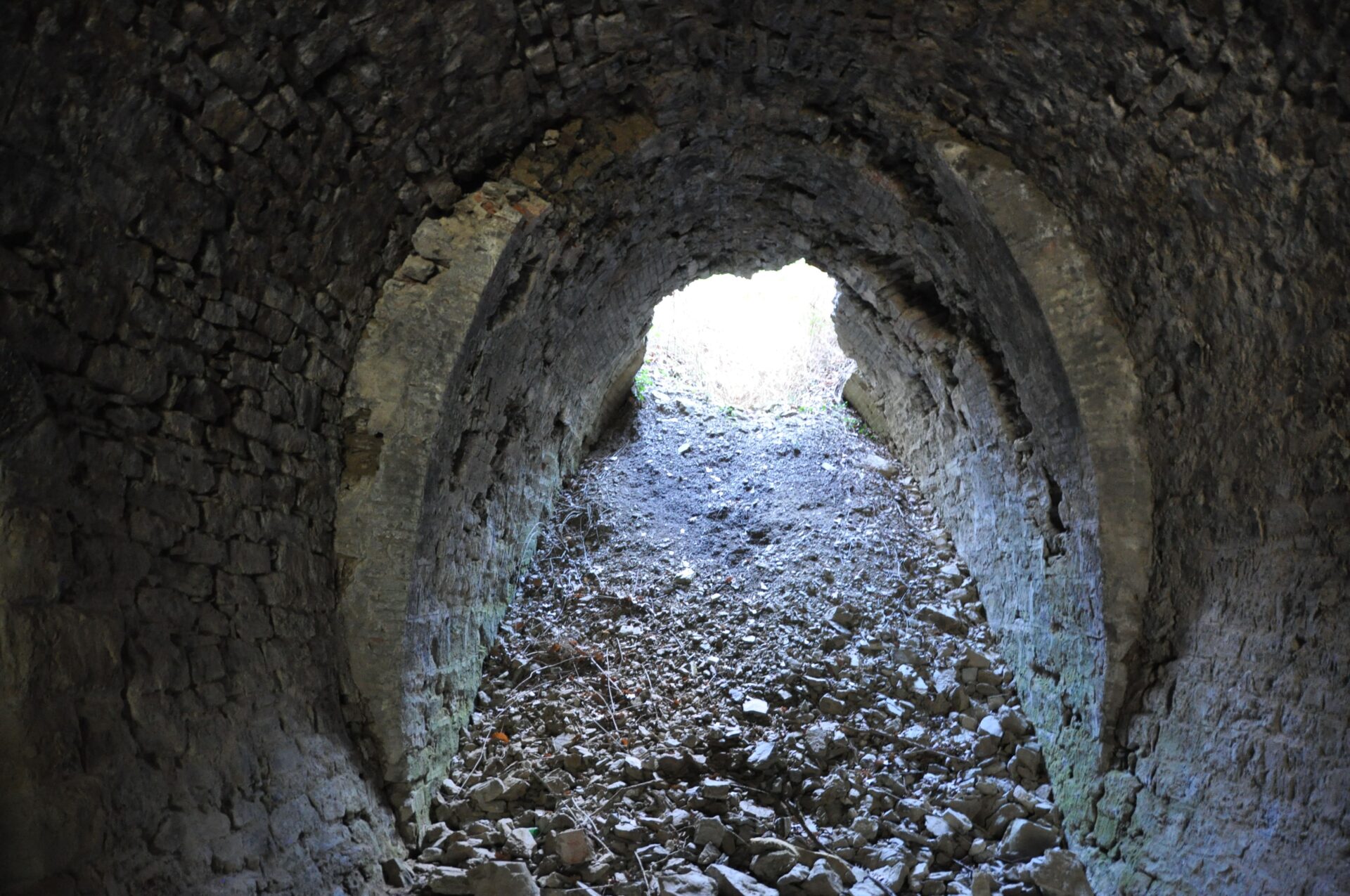
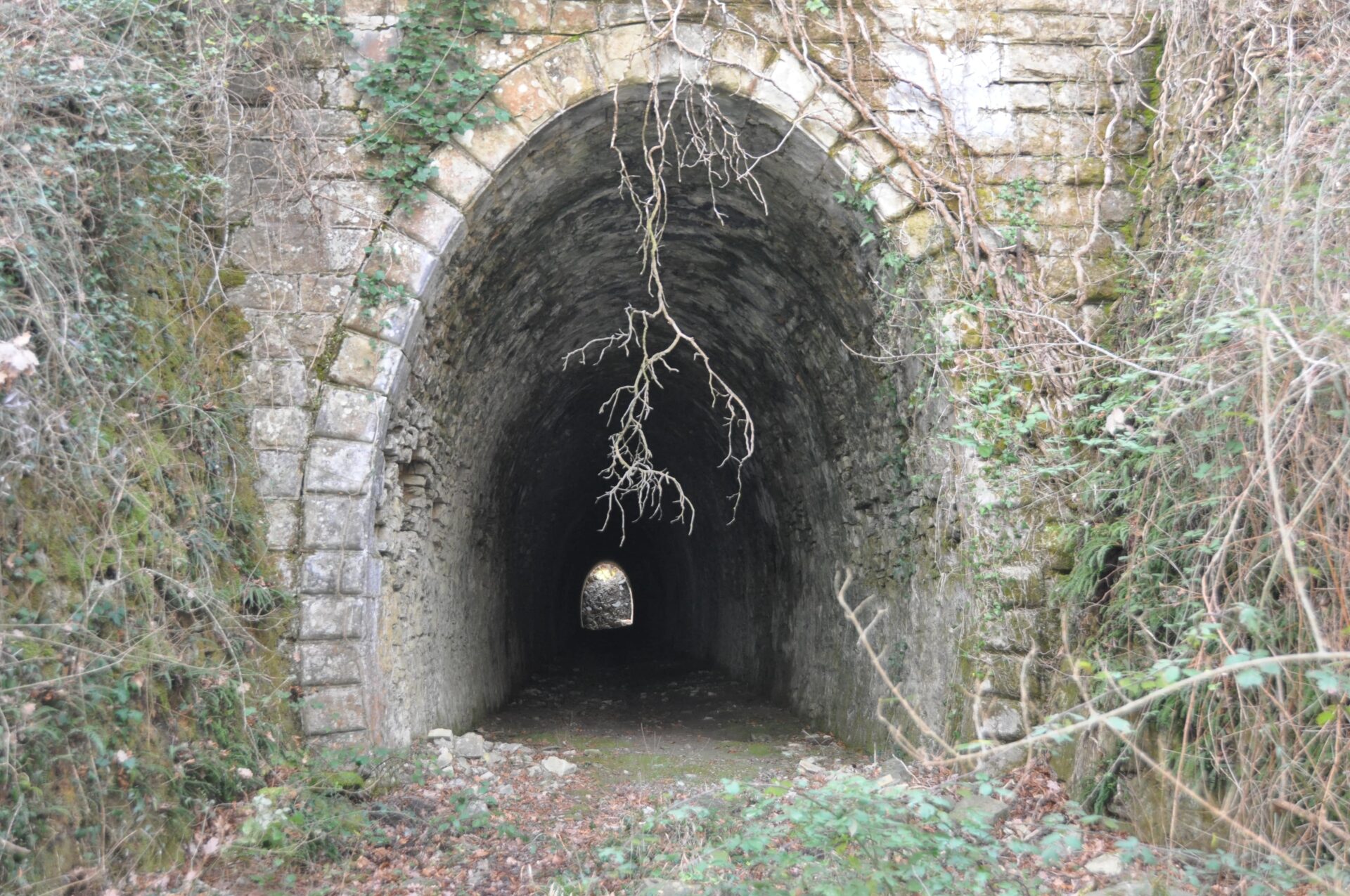
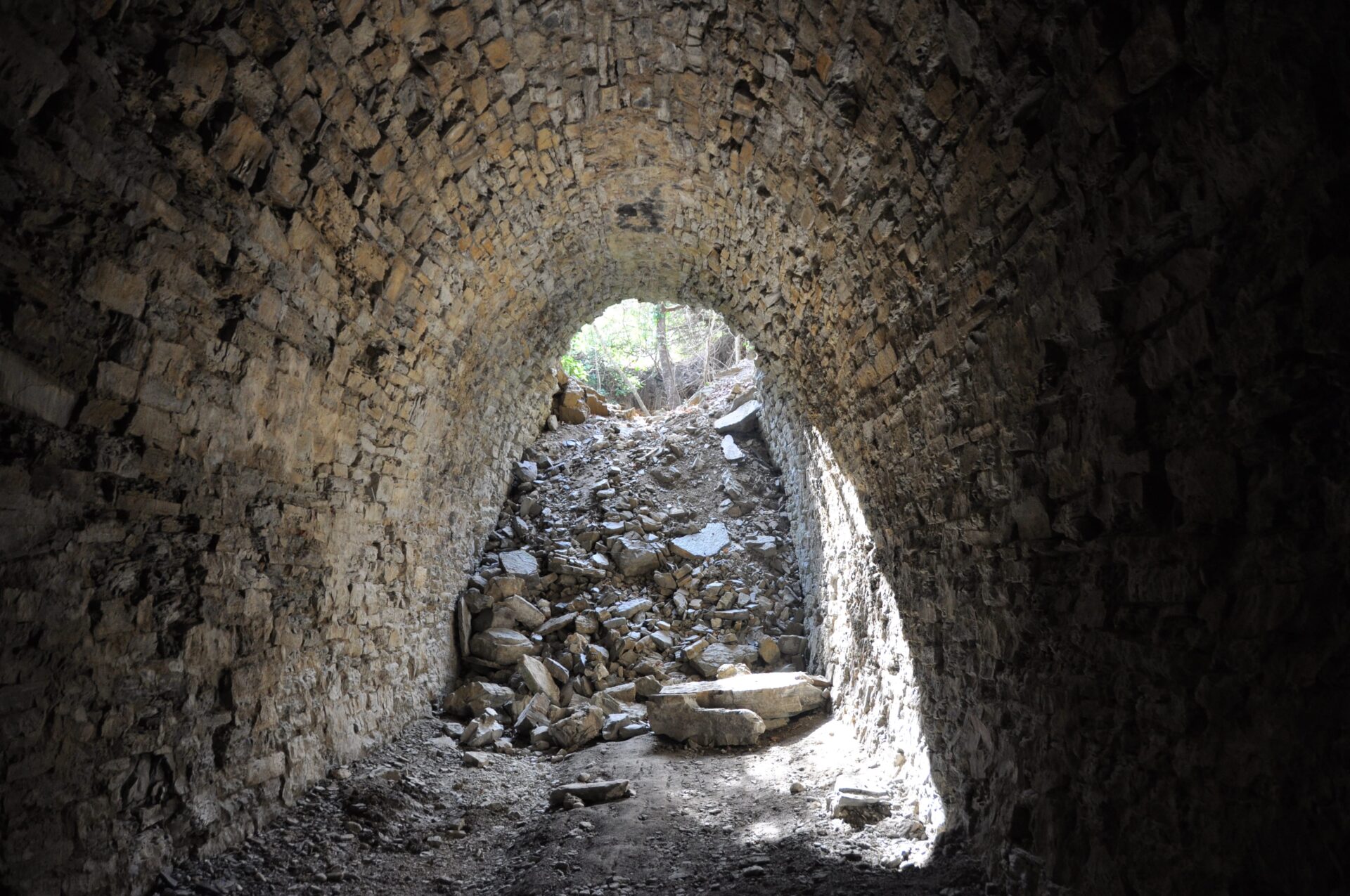
The tunnels (Torrino and Anghiari): The Germans did not merely block the entrances. They pushed wagons loaded with explosives into the tunnels and detonated them beneath the ‘keystone’. The collapse of the inner vault turned the tunnel into a trap of debris tens of metres long, and restoring it would have required years of excavation.
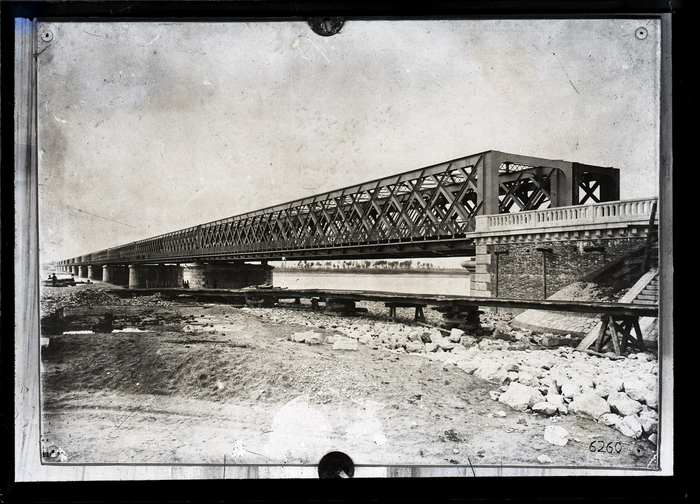
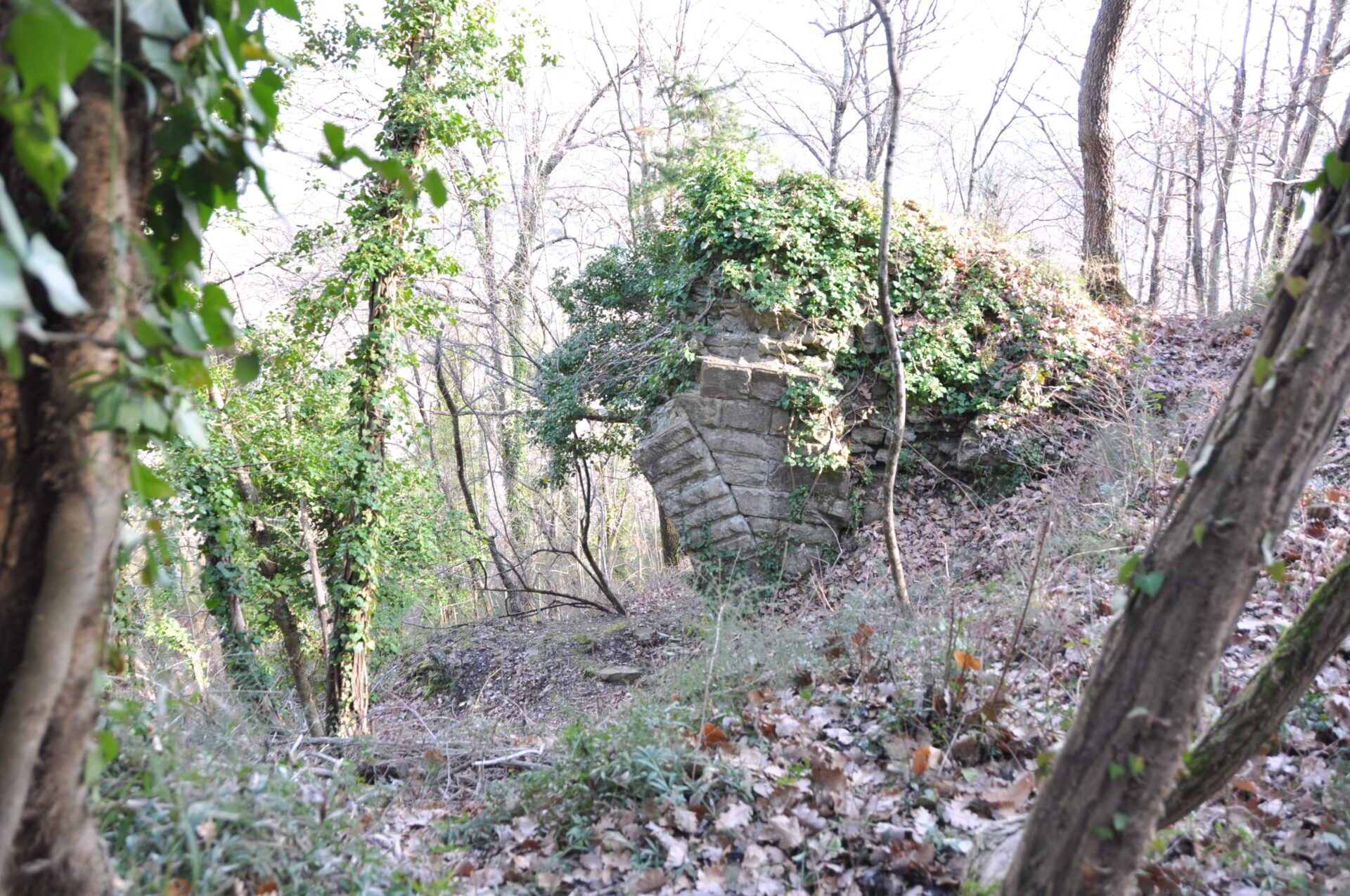
The viaducts and bridges: The bridges over the Cerfone, the Sovara and the Tiber, and many smaller structures on the pass near the Torrino, were brought down by mining their load-bearing piers. When the central pier was blown, the whole masonry span collapsed under its own weight, leaving gaps in the route that could not be bridged.
The Pescaiola graveyard: In the Arezzo workshops, the locomotives that had survived the bombing were mined one by one. The Germans blew up the boilers of the steam engines: a procedure that made recovering a locomotive economically and technically impossible.
The context: the LXXVI. Panzerkorps and the trail of blood
The destruction of the FAC was coordinated by the LXXVI. Panzerkorps, the 76th Panzer Corps, under the command of General Traugott Herr. This formation, a veteran of the Salerno and Anzio fronts, conducted the retreat in the Arezzo area with systematic violence, directed not only against infrastructure but also against the civilian population.
While the demolition engineers were mining the railway, units under the 76th Panzer Corps, among them the ‘Hermann Göring’ Division, were committing atrocious massacres, such as those of Civitella, Cornia, San Pancrazio (29 June) and Cavriglia (4 July). The destruction of the railway and the killing of civilians were part of the same military logic: to ‘clear’ the territory and annihilate every resource before it fell into Allied hands. For the Germans, the narrow-gauge railway was a strategic threat: they feared that the 4th Indian Division might use it to move assault troops directly towards the mouth of the Casentino.
The geographical paradox: destruction versus creation
Just as the Arezzo-Fossato was dying under the blows of the German engineers, a few kilometres away and at higher altitudes the Allied engineers were making the opposite effort.
In a remarkable technical contrast, while the Germans were erasing a century-old work of civil engineering in the valley, the British and Indian Sappers were laying out Jacob’s Ladder on the heights above. Two forms of military engineering pushed to the extreme: one devoted to annihilating the past, the other to creating a future that was precarious but necessary for the advance.
The end of an era
The destruction carried out by the 76th Panzer Corps was so effective that the Arezzo-Fossato di Vico railway never reopened. After the war, the technical surveys of the Ministry of Transport confirmed that the damage to bridges and tunnels was so extensive as to make reconstruction unsustainable.
Today the visible remains – the severed arches in the fields, the buried portals of the Torrino tunnel and the stations turned into farmhouses – stand as silent monuments to that policy of ‘scorched earth’ which, in the summer of 1944, condemned a railway to death to cover a retreat.
Bibliography and web sources:
- Dell’Omo, Mariano, La ferrovia Appennino Centrale. Arezzo-Fossato di Vico, Cortona, Calosci Editore, 1988. A fundamental work, which records the post-war technical surveys of the damage and the history of the line’s construction.
- Caselli, Giovanni, L’Appennino Centrale: archeologia industriale di una ferrovia dimenticata, Firenze, Giunti, 1992.
- Rossi, Attilio, Binari nel fumo: storia delle ferrovie in Casentino e Valtiberina, Cortona, Calosci Editore, 1995.
- Muscolino, Piero, Le ferrovie secondarie di Arezzo, Roma, Modeltecnica, 1978.
- Turchi, Gian Guido, Arezzo-Fossato, l’Appennino Centrale, in ‘I Treni Oggi’, no. 55, Salò, ETR, 1985.
- Gradassi, Enzo, Arezzo 1944: la Liberazione, Arezzo, Editrice Veneta, 1994. Essential for reconstructing the days when the front passed through and the impact of the Allied bombing on the city.
- Schreiber, Gerhard, Le stragi naziste in Italia (1943-45), Roma, Stato Maggiore dell’Esercito – Ufficio Storico, 1996. Analyses the conduct of the German troops, including the ‘Hermann Göring’ Division under the command of the 76th Corps.
- Gentile, Carlo, I crimini di guerra tedeschi in Italia: 1943-1945, Torino, Einaudi, 2015. Sets out the operational framework and the logic of ‘scorched earth’ applied by the retreating German units.
- Klinkhammer, Lutz, L’occupazione tedesca in Italia 1943-1945, Torino, Bollati Boringhieri, 1993.
- Stevens, W. G., Bardia to Enfidaville: 4th Indian Division, Wellington (NZ), Historical Publications Branch, 1962 (reprinted 2016). Contains the operational diaries on the Indian division’s advance in the Alta Valle del Tevere and the construction of Jacob’s Ladder.
- Ministero dei Trasporti, Relazione sullo stato delle ferrovie italiane dopo le distruzioni belliche, Roma, Istituto Poligrafico dello Stato, 1946. The official document that declared it economically impossible to restore the Arezzo-Fossato.