Background
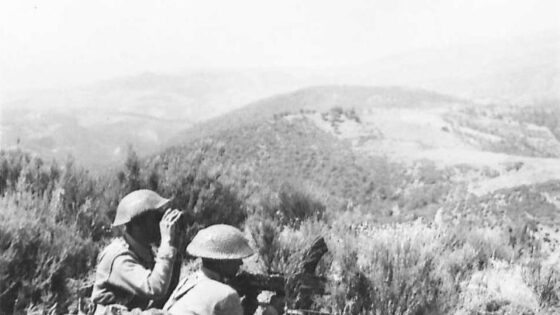
In July 1944 the war reached the mountains between Città di Castello and Monte Santa Maria Tiberina. After the liberation of Perugia, the Allies were aiming to break through the last German defences in northern Umbria, towards Tuscany. The area of Monte delle Gorgacce, covered in woods and dotted with farms, became within a few days one of the most fiercely contested points on the front.
The German defence and the position of the mountain
It was held by German units of XIV Corps, which used the ridge to control the roads towards Lippiano and the Tiber. The position, naturally strong, was a strongpoint of the German rear line and blocked the Allied advance from the south.
The men of the attack
The task of taking it fell to the 10th Indian Division of the British Eighth Army. In the front line was the 3rd Battalion, 18th Royal Garhwal Rifles, an Indian unit experienced in mountain warfare. The attack was carefully prepared: a frontal diversion on Monte Sgariglio to draw the enemy’s fire, followed by a night assault on the eastern flank of Gorgacce.

Humber armoured car of the 10th Indian Division, 22 July 1944. Photo Sgt Bowman, No. 2 Army Film and Photographic Unit. Imperial War Museums, NA 17069. Public domain.
The capture of the mountain – 14 July
On 14 July 1944, after hours of fighting, the Indian troops took the summit of Monte delle Gorgacce, which German sources describe as the scene of a ‘furious struggle’. But the victory was only the beginning.
The attack on Casa i Monti (Pt. 611)
In the following days, orders were given to carry the action on towards the south-east, securing a wider defensive line. The tactical objective was Point 611 (Pt. 611 – code name ‘DELHI’), together with the neighbouring points Pt. 614 and Pt. 512.
The battalion’s war diary records that on the night of 15–16 July the attack was held up and failed because of delays and enemy fire (twenty-two casualties plus six mule drivers); the following night A Company captured Pt. 611 (five German prisoners, three wounded) and then Pt. 614 and Pt. 512 as well.
The strategic significance of the victory
With the fall of Monte delle Gorgacce and Casa i Monti, the German defence in the Upper Tiber Valley finally gave way. The heights from which, until a few days earlier, the enemy had watched every movement towards the Tiber passed to the Allies, opening the way towards Caldarino, Lippiano and Tuscany.
The battle, which lasted four days, cost dozens of lives and marked the beginning of the German withdrawal from the border between Umbria and the Arezzo area.
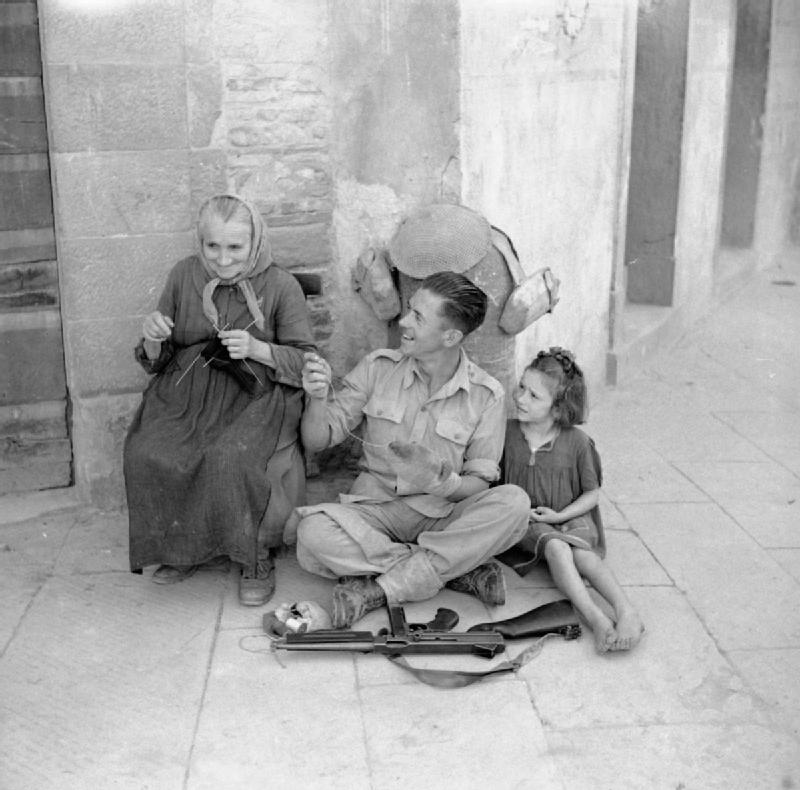
At Anghiari an elderly woman and a girl keep company with Rifleman Brighthouse of the 8th Battalion, The Manchester Regiment (10th Indian Division), as he darns a sock, 15 August 1944. Photo Sgt Wooldridge, No. 2 Army Film and Photographic Unit. Imperial War Museums, NA 17875. Public domain.
Sources
- War Diary – 3/18 Royal Garhwal Rifles, July 1944 (Army Form C-2128, Appendices 1–2)
- Notes of C.O.’s Orders for Attack on 15/16 July 1944 (Appendix I)
- Storia Tifernate – Battaglia di Monte delle Gorgacce (Alvaro Tacchini)